
Patient Education
Life style changes is all that is needed.
Our traditional culture and simple common sense tells us that the
best way to maintain good health is to enhance the Body defenses and
there by
prevent disease occurring in the first place.
“Health is not just absence of disease but physical, mental, social
and spiritual well being.”
HOW TO ACHIEVE THIS?
Healthy Eating
Low salt, low fat, more & vegetables, balanced diet.
Good habits
Stop smoking, Gutka and Alcohol. Tobacco is the no.1 preventable cause of diseases (including Heart attack , paralysis , COPD, lung cancer, GI cancers etc.)
Get physically active
Regular physical activity 30-60 min per day on atleast 5 days a week will help in preventing diseases as well as increasing your energy levels.
Stress management
Be a positive person. Learn to relax by the method of your choice- Yoga/ meditation/ music/gardening/praying to God.
FACTS
A. Chronic conditions, including cardiovascular diseases (CVD), diabetes, obesity, cancers and respiratory diseases, accounts for 59% of the 57 million deaths annually and 46% of the global burden of the diseases.
B. 7 of the top 12 leading risks to health – high blood pressure, high cholesterol, obesity, physical inactivity and insufficient consumption of fruits and vegetables- together with alcohol and smoking are strongly related to life style.
C. Controlling these risk factors can prevent 50% of the diseases!
10 SIMPLE GUIDE LINES TO REDUCE YOUR RISK
- Know your Blood pressure if > 130/85 needs control.
- Stop smoking completely.
- Avoid taking alcohol.
- Know your cholesterol levels and manage.
- If you are Diabetic follow the treatment.
- Do at least 30 min of regular physical activity daily.
- know your F/H of diseases primary preventive measures
- Consume a Diet high in fruits, vegetables, whole grains.
- Avoid excess salty/ fatty / sweet foods.
- Reduce mental stress.
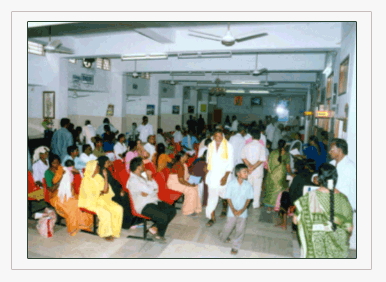
Know your Risk of Heart Attack & Paralysis
| Risk Factor | A High risk |
B Medium risk |
C Very low |
|---|---|---|---|
| 1. B.P | > 140/90 | 120-139/80-89 | < 120/80 |
| 2. D.M | Yes | Mild | No |
| 3. Cholesterol | > 240 mg/dl | 200-239 | < 200 |
| 4. Heart Problems, eg.A.F | Yes | Not checked | No |
| 5. Smoking/Alcohol | Daily | Occasional | No |
| 6. Weight/Exercise | Over weight/no | Moderate/occ. | Balance Weight/Daily |
| 7. Hereditary | Yes | Not sure | No |
| Every row =1 score | 3 or more see your doctor | 4-6 take care | 6-8 good |
- A column scores 3 or more : has to consult doctor immediately
- B column scores 4-6 : has to change life style
- C column scores 6-8 : low risk of Heart attack & Stroke
Know your Risk Assessment
- AGE : You are a man over 45 or a woman over 55 years old
- FAMILY HISTORY : Your father or brother had a heart attack before age 55 or your mother or sister had one before age 65.
- MEDICAL HISTORY : You have coronary artery disease, or you have had a heart attack. you have a had a stroke. You have an abnormal heartbeat.
- TOBACCO SMOKE : You smoke, or live or work with people who smoke every day.
- TOTAL CHOLESTEROL AND HDL CHOLESTEROL : Your total cholesterol level is 240 mg/dl or higher. Your HDL (“good”)cholesterol level is less than 40 mg/dl if you’re a man or less than 50 mg/dl if you’re a woman. You don’t know your total cholesterol or HDL levels.
- BLOOD PRESSURE : Your blood pressure is 140/90 mm Hg or higher, or you’ve been told that blood pressure is too high. You don’t know what your blood pressure is.
- PHYSICAL INACTIVITY : You don’t accumulate at least30 minutes of physical activity on most days of the week.
- EXCESS BODY WEIGHT : You are 20 lbs or more over weight.
- DIABETES : You have diabetes or take medicine to control your blood sugar.
Diabetes is a systemic disease affecting all important organs of the body.
- India is the” Diabetic capital of the World “, currently with 32 million and the figure is still growing!
- Maintaining the blood sugars in normal levels is “just one part of the management”.
- Diabetics have high risk of cardiovascular diseases. 2/3rd of the people with Diabetes die of Heart disease or Brain Stroke (paralysis).
- Diabetic Neuropathy is the most common and Painful complication upto 50% of the people with D.M are affected to some degree. It is also a major cause of impotence in diabetic men.
- Diabetes retinopathy is a leading cause of Blindness and visual disability. After 15 yrs of Diabetes about 10% developed severe visual handicap.
- Diabetes is among the leading causes of kidney failure.
- Diabetic foot disease, due to changes in blood vessels and nerves, often leads to ulceration and subsequent limb amputation. Diabetes is the most common cause of non traumatic amputation of lower limb.
The corners stones of diabetic acre are
- Medication.
- Comprehensive patient education.
- Nutrition advise and weight management.
- Life style modification and exercises.
For more information contact Diabetes clinic every Sunday between
10- 12 noon by prior appointment.
ARE YOU AT RISK ?
IN an adult blood pressure > 140/90 mm hg is hypertensive. High blood pressure has no sign or symptoms, you can have it for years with out knowing it. The only way is to measure it.
WHY SHOULD YOU CARE ?
High blood pressure can hurt your body in many ways.
It adds to the work load of your heart and arteries and contributes to Heart attacks, Heart failure , kidney failures, Paralysis and some times Blindness. Hence it is called as “SILENT KILLER.”
WHO IS AT RISK OF HYPERTENSION?
Anyone can have it. 9/ 10 people with high B.P do not have an identifiable cause (essential hypertension). However people with
- Family history of High blood pressure.
- Age more than 35 in men > 45 in women.
- Over weight , lack of exercises.
- High salt diet, excessive alcohol consumption and
- Diabetics have high risk of hypertension.
WHAT SHOULD YOU DO
Hypertension cannot be cured but can be controlled and it effects can be prevented or reduced by following these simple measures
- Eat less salt, low fat diet. Take more fruits and vegetables.
- Have a program of regular exercises and lose weight and maintain healthy weight.
- Avoid smoking, alcohol abused and reduce stress.
- Take medicines for high B.P on the advice of your Doctor regularly everyday and lifelong on the advice.
- Managing high blood pressure is a life long commitment.
- Avoid fast food and packaged food.
- Don’t stop taking your medicines if your B.P is okay that means the medicine is working!
For more information contact Diabetes clinic every Sunday between
10- 12 noon by prior appointment.
What is a Heart attack? A heart attack occurs when a blood flow to
part
of heart muscle become blocked. If the blood flow is not restored
quickly the heart get permanently damaged.
Know the warning
signs of Heart attack- Act in time to save life.
Heart attack is
leading cause of death world wide. In India it occurs
in
younger population .According to WHO report the estimated patients
of
CAD in India are about 45 millions!
Heart attack is a life- and-death emergency- every second
counts.
“Treat any chest pain as a medical emergency”
Especially if you are diabetic, if you are smoker, or/ have high
blood
pressure / have family history of heart problems. Half of the heart
attack deaths occur with two hours after beginning of the heart
attack and / or before the victim reaches the hospital ! So get help
fast.
Some Heart attacks are sudden and intense. But most heart attacks
start
slowly, with mild pain or discomfort then progress.
HEART ATTACK SYMPTOMS
- Pain or discomfort in one or both arms, your back, neck, jaw or Stomach.
- Pain or discomfort in the center of your chest that lasts for more than a few minutes, or goes away and comes back.
- Pressure, squeezing or fullness in your chest.
- Shortness of breath.
- Nausea, vomiting, cold sweat or dizziness.
In women symptoms may be different and vague, unusual fatigue, anxiety, heart burn may precede heart attack.
WHAT SHOULD YOU DO?
Don’t wait- minute matters
- Call emergency no.’s 2217401/ 2217402/9440808640/108
- Stop all activity and sit or lie down in whatever position is most comfortable.
- If you have Sorbitrate take the dosage subsequently.
- Rest comfortably and wait for ambulance.
- “Don’t do any activity, Don’t walk or strain or climb stairs”.
Today there are excellent treatments like Primary angioplasty, Thrombolytic therapy for heart attack that can save lives. However treatment is most effective when started within 1 hr of onset of symptoms. This prompt care dramatically reduces heart damages. In fact 88% of Heart attacks survivors under ages 65 can return to their usual work.
EMERGENCY TREATMENT OF HEART ATTACK
PRIMARY ANGIOPLASTY & THROMBOLYSIS
When a Heart attack occurs, an artery to the heart (coronary artery) is blocked and the heart muscle suffers irreversible injury and dies. This doesn’t happen instantly but over a period of time. The damage increases the longer the artery stays blocked. Delay may reduce your chance of survival.
If a victim gets to a cardiac intensive care facility fast enough, latest treatments can be done to dissolve the clot to save life and decrease the disability.
Reperfusion therapy is done with
- Clot lysing drugs like Urokinasre / Streptokinase or r-tPA are injected to dissolve the clot in a coronary artery and restore blood flow.
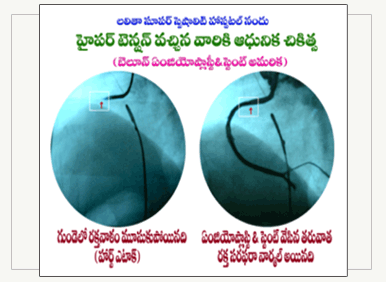
- Primary balloon angioplasty (PTCA). ? is the best choice of treatment for acute heart attack. Here a guiding catheter is passed till the origin of the blocked coronary artery over which balloon is introduced and expanded followed stent implantation to keep the vessel open.
- Antiplatelets, anticoagulants, statins, antihypertensives, etc.
- Bypass surgery is a surgery in which arteries and veins are taken from other parts of body and used to bypass the blocked coronary artery.
This sophisticated treatment requires full-fledged cardiac cathlab backup facilities and technical expertise of an interventional cardiologist.
FACTS ON STROKE
- Stroke is the no.1 cause of adult disability and the 3rd leading cause of death World wide.
- Stroke can affect any one regardless of age, gender, Ethnicity or socio-economic status.
- A stroke is a Brain Attack. It occurs when a blood clot interrupts blood flow to the brain, or when a blood vessel ruptures.
HOW SERIOUS IS A STROKE ?
- A stroke can cause paralysis, problems in thinking clearly, memory loss, speech problems, emotional difficulties, numbness and pain.
- Fewer than 50% of stroke survivors return to work and 25% are permanantly bed ridden.
- Risk of another stroke is 10 times more.
COULD IT HAPPEN TO YOU?
Yes. A STROKE CAN HAPPEN TO ANYONE, BUT YOU ARE AT HIGHER RISK IF YOU HAVE ANY OF THE FOLLOWING
- High blood pressure is the most important risk factor.
- Smoking increases the risk 5 to 6 times than non-smoker.
- Heart disease & Atrial fibrillation – irregular heart beat.
- Diabetes increases the risk by 2 to 4 times.
- High cholesterol levels.
- Excessive alcohol , Inactivity.
- After age 55, the risk of stroke doubles every 10 yrs.
- Prior Stroke or TIA.
- Family history of stroke.
Stroke is a medical emergency! Every minute counts. DIAL 9440800353.
You may experience one or some of the symptoms which may occur temporarily called TIA (transient Ischemic Attack). Even if the symptom subside you have to see the neurologist and act urgently before the bigger attack strikes
“Act in Time to save Brain”
PARALYSIS-TREATMENT SCIENCE FICTION COMES TRUE!
10 years back nothing could be done to stop a stroke. Luckily that is not true today. Last decade has seen tremendous advances in the treatment of stroke (paralysis). The first the important advances is treating the patients in stroke units shown to reduce the mortality and dependence.
A stroke unit is a dedicated ICU managed by multidisciplinary team of doctors, nurses, physiotherapists, Speech therapists, Dietician and counselors. Complications are less frequent and outcome better in all the patients treated in stroke unit.
A blood clot cuts off blood supply to a part of Brain causing paralysis
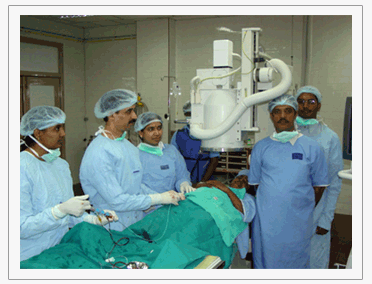
Latest treatments can reach the clot and give thrombolytic drugs there by restoring the blood flow and save brain.
Thrombolytic therapy is a treatment to break up dangerous clots inside the blood vessels of brain by using clot dissolving medications like rt-PA, urokinase, etc. if the patient can reach stroke unit within 3 hrs of onset of symptoms and if eligible to receive IV thrombolytic therapy is proven to be beneficial. Recently window period extended to 4 ½ hrs in select patients.
THROMBOLYTIC TREATMENT FOR PARALYSIS
If the patient comes with in 6-8 hours latest treatment thrombolytics drugs can be given intra arterially (directly giving the medicine at brain vessel where it is blocked) by multi disciplinary neuro interventional team in a Cath lab.
Now both these advanced treatments are done in Lalitha Superspeciality Hospital regularly.
Think of every stroke or TIA as a life threatening emergency.
“TIME IS BRAIN” So act quickly.
In the hospital emergency room, CT scan is done to differentiate two types of the stroke. If the blood vessel is blocked (ischemic stroke) – thrombolysis can be done. If the blood vessel is ruptured ( hemorrhagic stroke) neurosurgeon is also consulted to plan management. Afetr recovering from a stroke lifelong treatment is required with medicines for secondary prophylaxis.
For more details contact Stroke clinic- Saturday evening 4pm – 8pm
Head ache is a common symptom both in children and adults. Accounting for missing school/ job, disturbing daily routine and causing great misery sometimes.
The two important varieties are
Primary headaches (80%) Benign but chronic recurrent and disturbing
- Migraine and migraine variants.
- Tension type headaches.
- Cluster headaches.
Treatment
General measures
- Regular Diet, Sleep & exercises.
- Avoid precipitating factors.
- Relaxation and stress management.
- Quit smoke, avoid harmones
- Prophylactic medication.
- Drugs for acute attack.
Secondary headaches (10-20%)
These are because of serious underlying diseases and need to be diagnosed by CT scan/MRI scan/ MRA/MRV/CSF analysis as required for early management.
When to see a Doctor and get investigated
- Sudden , severe , “ thunderclap” headache
- A headache occurs with a stiff neck, fever, vomiting, drowsiness, confusion, Paralysis, slurred speech and blurring of vision.
- You have headaches that wake you up at night.
- The headaches are occurring daily or are becoming worse.
- The headaches occur after physical exercise, sexual activity, coughing, or sneezing.
Seizures are abnormal involuntary movements or behaviour due to unsual electrical activity in brain. Epilepsy is a group of related disorders characterized by a tendency for recurrent seizures. Epilepsy is a common condition effecting 1% of population.
Many great people like Alexander, Issac Newton, Alfred Nobel, Charles Dickens, Richard Burton, Tony Greg, Johnty Rhodes, and Socrates all had Epilepsy! But it did not prevent them from achieving heights and success in their fields.
It is a common neurological disorder that results when abnormal bursts of electrical discharges occur in brain. World wide atleast there are above 10 crores and about 1 crore in India suffering from this disease. There are now accurate diagnostic modalities like CT, MRI, EEG etc., to evaluate accurately the type and cause of epilepsy. The majority of epilepsies are controlled through drug therapy. In certain cases surgery may be used. Educational, social and psychological supports are also part of the total treatment paln. The most important message is that Epileptics can lead a normal life like any other person.
FAQ's
- It is contagious? No.
- Can we continue studies? You can continue the studies normally.
- Can I marry? You can marry and have normal children.
- Can I continue taking Drugs during pregnancy? Yes, if needed under medical supervision. Folic acid supplementation reduces side effects.
- Is it Hereditary? Most of the times it’s not.
- Can they travel? Regular usage of medicines with fits under control can travel normally.
- Can they have Impotence? No.
- Is it related to madness? No relation with mental illness/madness.
FOR MORE INFORMATION CONSULT EPILEPSY CLINIC, On Saturday at Lalitha
Super Specilaities Hospital by prior appointment.
MRI OF CERVICAL & LUMBAR
Neck pain and back pain sometimes radiating to arm and leg respectively are quiet common because of occupational strain (working with computers / type writers) incorrect Postures and increased use of vehicles.
The common symptoms are stiff neck, neck pain, and restriction of movement, radiating pain, numbness& weakness of hand.
Sciatica: Back pain, radiating to the leg, increased on standing or walking.
TREATMENT
- Conservative:- Rest, analgesics (pain killers) & physiotherapy cure 80% of the cases.
- Surgical decompression is needed in some severe cases.
PREVENTION
- Maintaining good postures while sitting, standing and sleeping.
- Using ergonomically designed chairs.
- Practicing proper body mechanics while doing tasks.
- Balanced diet, weight and regular exercise.
HI THERE,
How can we help you today
How can we help you today
